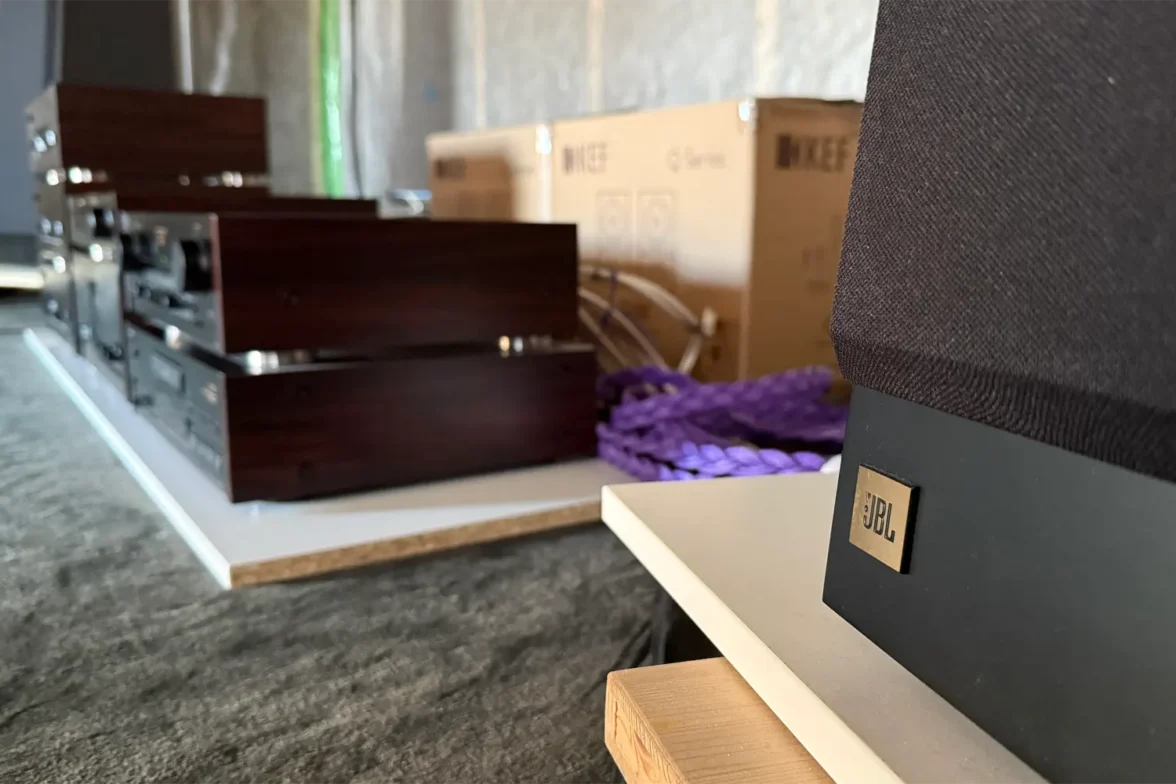
A lot of stuff was going on and the room wasn’t exactly a top priority. We moved in without having water in the kitchen so we were carrying the dishes to the kind neighbours. But, all things eventually do come to an end so in a couple of months I was prepared to use the room as my work office – or at least a very roughly assembled approximation of one. Let’s just say it had more enthusiasm than furniture.
I dragged in the old desk and then proceeded to fill the entire room with boxes containing subwoofers, speakers and various components that any normal person would call “junk,” but we nerds lovingly refer to as equipment.

Not terrible, but not great either
The main speakers had been standing there from day one, so with great optimism I started pulling cables and fired up some music. My first impression was: not terrible, but not great either. Strangely enough, that felt like a relief. In my previous room, the initial measurements were so catastrophic that I briefly considered blaming the laws of physics. This time, at least the stereo image was already promising, thanks to some acoustic features built into the room during construction: open walls and a perforated ceiling – but still – no doors! Probably a rare treat for someone who has spent far too many evenings wrestling with standing waves.
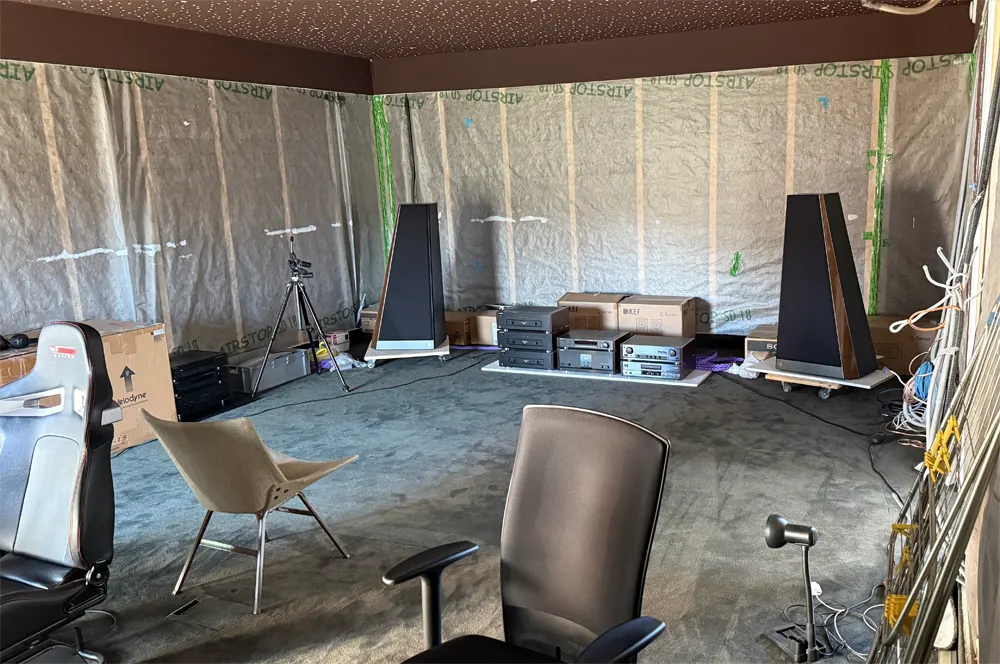
The first hard data
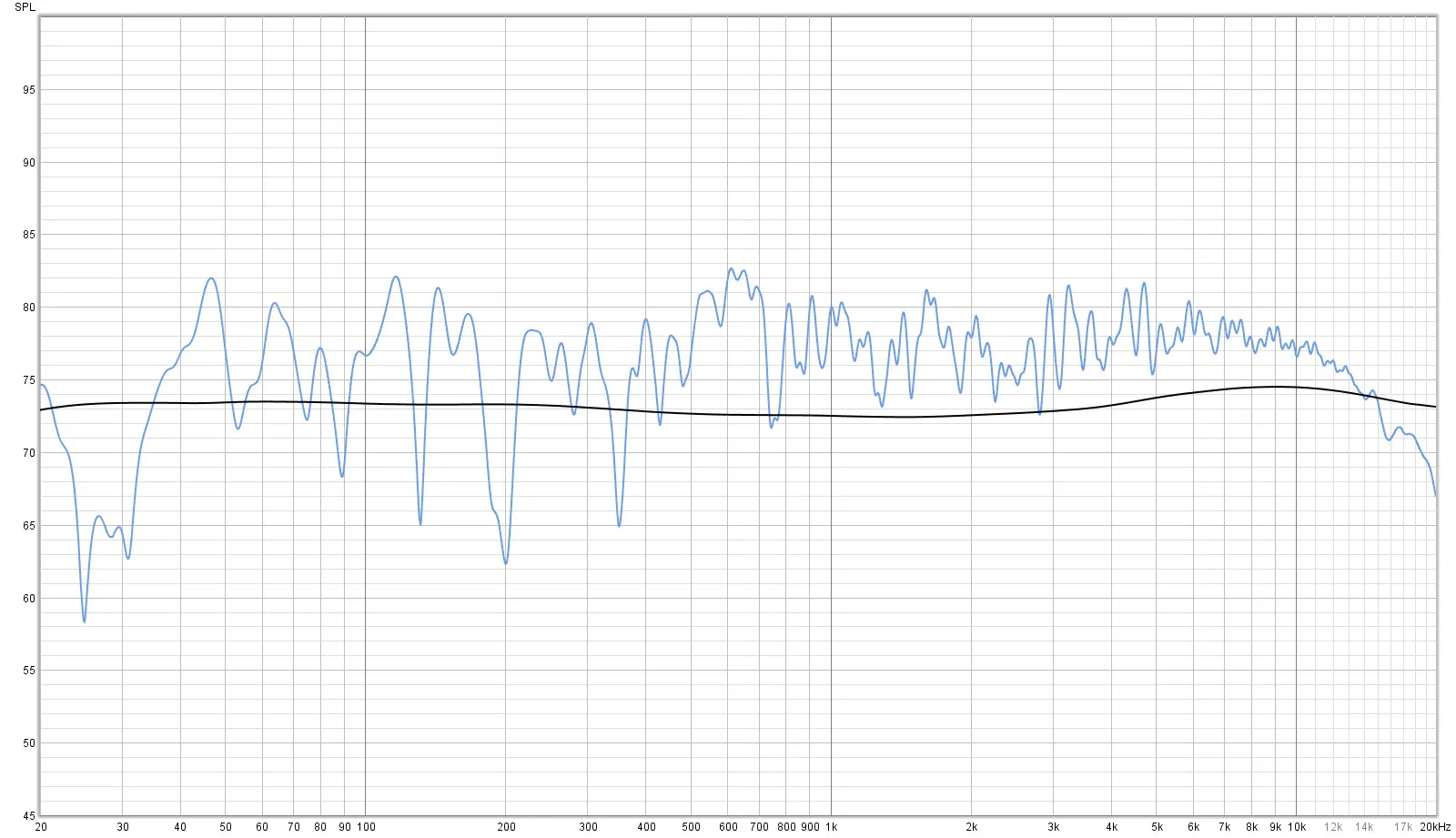
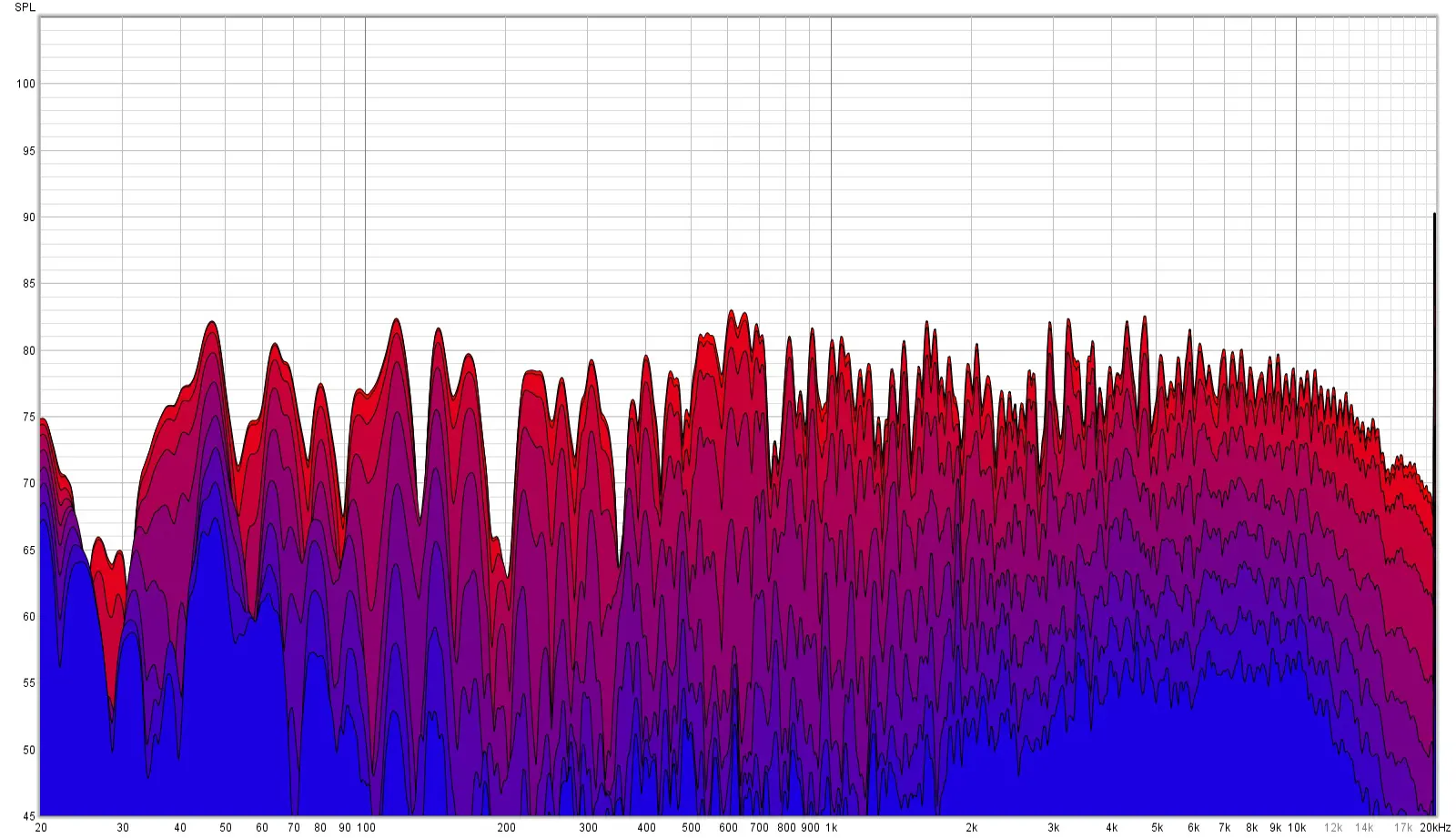
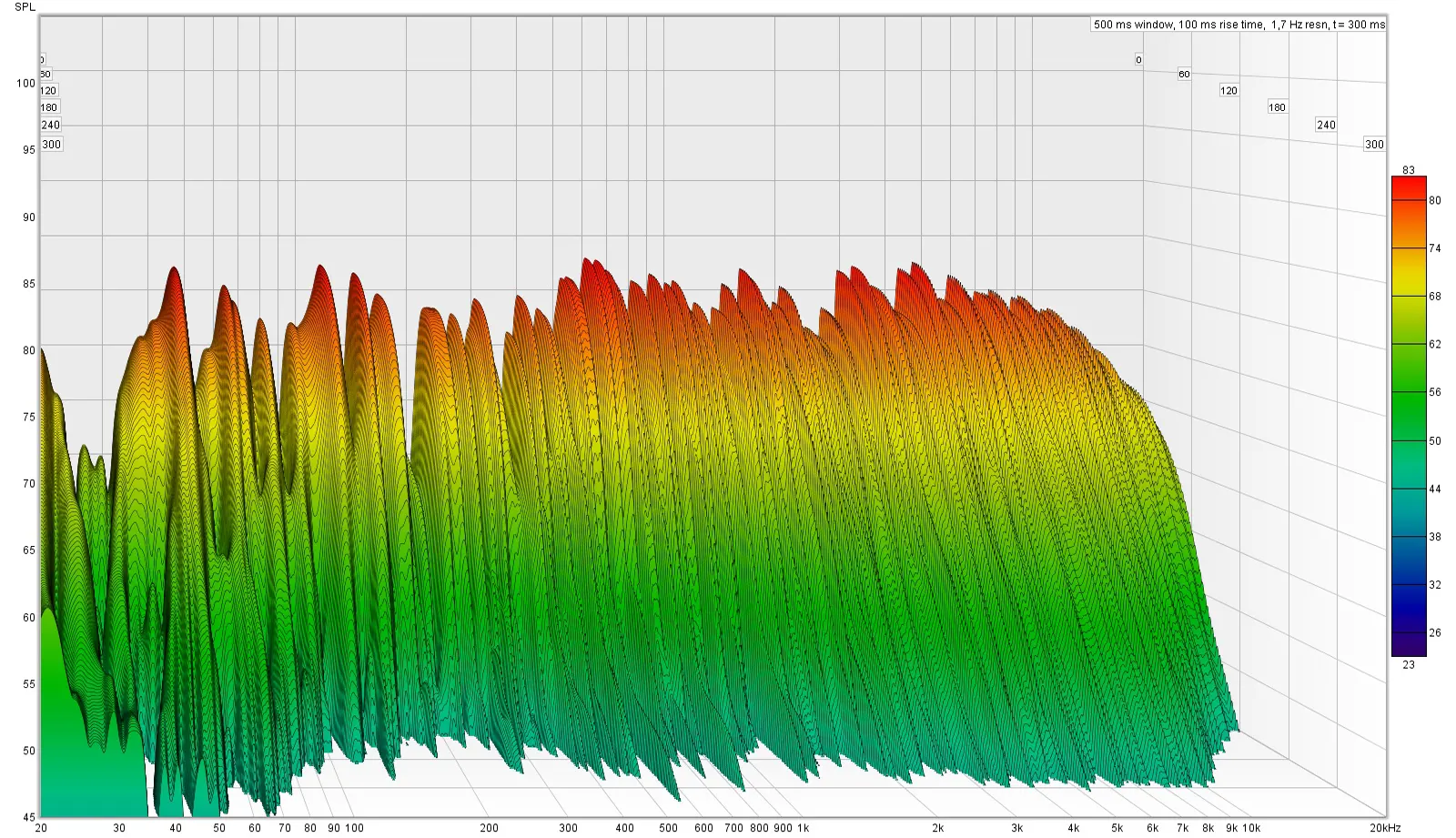
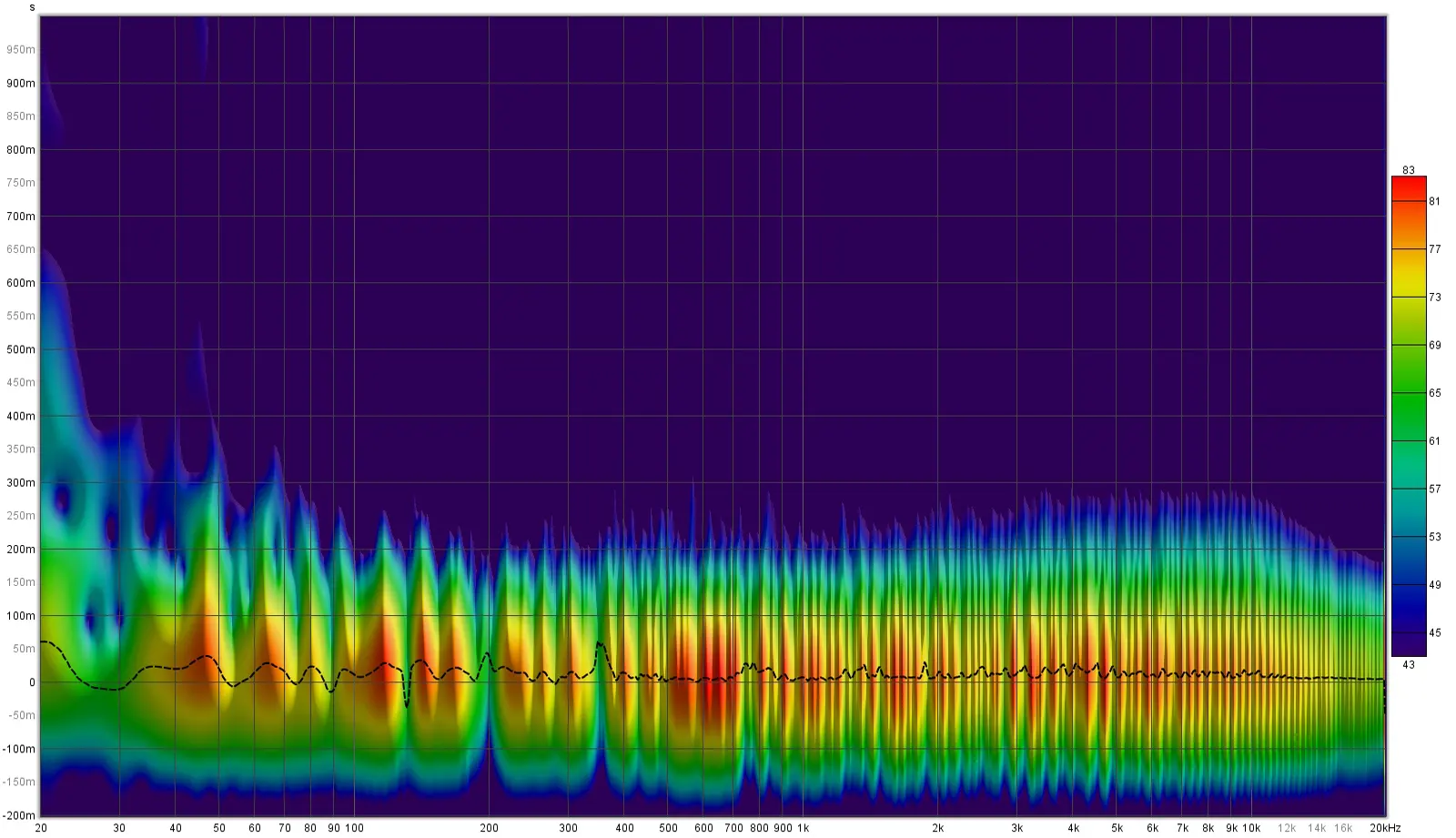
Another few months later, the first measurements were finally taken. The plots largely confirmed what my ears had already hinted at: the room is not yet performing well acoustically. Strong low-frequency peaks and nulls, combined with uneven decay, produce muddy and inconsistent bass. The mid and high frequencies behave somewhat better, but still show enough reflections and irregularities to compromise stereo imaging. RT60 values are lower than in a typical untreated room, yet still too uneven to provide a stable tonal balance.
Conclusion: a solid starting point, but the room clearly needs more treatment and optimisation!